The Ground Beneath Your Home Is Moving : And It's Breaking Your Pipes
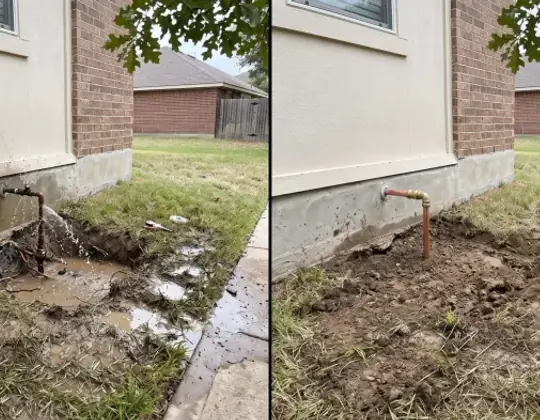
Beneath every Allen home lies Blackland Prairie expansive clay soil - soil that behaves like a living thing. It swells when it absorbs water and shrinks when it dries out. This constant movement pushes, pulls, and shifts the ground beneath your foundation. And your plumbing pipes, embedded in or under that foundation, take the abuse.
Understanding how Allen's clay soil affects your plumbing helps you prevent slab leaks, protect your foundation, and make informed decisions about repairs and repiping.
What Is Blackland Clay Soil?
Allen sits on the Blackland Prairie, a geological region characterized by highly expansive clay soil. This soil contains montmorillonite - a clay mineral that expands dramatically when wet and contracts severely when dry.
Key characteristics of Allen's clay soil:
| Property | Allen's Clay Soil |
|---|---|
| Expansion rate | Can expand 10-30% of its dry volume when wet |
| Shrinkage | Contracts significantly during dry periods |
| Movement cycle | Expands and contracts multiple times per year |
| Depth | Can extend 20+ feet below the surface |
| Impact on foundations | Exerts tremendous pressure on slab foundations |
How Clay Soil Movement Damages Plumbing
The Cycle
- Rain/irrigation wets the soil → Clay expands
- Expansion pushes against your slab foundation → Slab shifts slightly
- Dry period arrives → Clay contracts
- Soil pulls away from the slab → Voids form under portions of your foundation
- Next rain wets the soil again → Clay re-expands
- Repeated cycles stress your foundation and pipes → Cracks develop
What Happens to Your Pipes
Copper pipes running under your slab don't move - they're rigid metal. When the soil shifts, it creates stress points on these pipes:
- Bending stress: Pipes bend slightly as soil moves unevenly
- Joint stress: Connections and joints separate or crack
- Point loading: Expanding clay pushes directly against pipe walls
- Void support: When soil contracts, pipes lose support and sag
Over years of seasonal expansion and contraction cycles, these stress points develop into:
- Hairline cracks that gradually widen
- Joint separations that start as slow drips
- Corroded sections where soil contact accelerates pipe degradation
- Complete pipe failures (burst pipes)
The Timeline
| Home Age | Clay Soil Impact on Plumbing |
|---|---|
| Years 1-10 | Soil settles, minimal pipe stress |
| Years 10-15 | Seasonal movement begins affecting joints |
| Years 15-20 | First slab leaks appear, soil movement has weakened connections |
| Years 20-30 | Multiple failure points, pipes approaching end of life |
| Years 30+ | Widespread failure, repiping recommended |
Most Allen homes were built between 1998 and 2010 - making them 16-28 years old and right in the high-risk window.
Allen Neighborhoods Most Affected by Clay Soil
| Neighborhood | Build Era | Home Age | Clay Soil Risk |
|---|---|---|---|
| Central Allen | 1970s-1990s | 30-56 years | Highest - longest soil exposure |
| Suncreek | 1990s | 26-36 years | High - mature trees add soil moisture variation |
| Bethany Lakes | Late 1990s-early 2000s | 24-30 years | High |
| Chase Oaks | Late 1990s-early 2000s | 24-30 years | High |
| Shadow Lakes | Late 1990s-early 2000s | 24-30 years | High - lake proximity adds moisture |
| Windridge | 1998-2005 | 21-28 years | Moderate-High |
| Watters Crossing | 2000-2010 | 16-26 years | Moderate |
| Twin Creeks | 2000-2008 | 18-26 years | Moderate |
| Starcreek | Early-mid 2000s | 20-26 years | Moderate |
| Star Ranch | 2000-2008 | 18-26 years | Moderate |
| The Farm | 2000s | 16-26 years | Moderate |
| Montgomery Farm Estates | 2000s-2010s | 6-26 years | Low-Moderate |
| Ridgeview Crossing | 2012-2020 | 6-14 years | Lower - newer construction |
How to Protect Your Allen Home's Plumbing From Clay Soil
1. Annual Plumbing Inspection
We recommend annual plumbing inspections for all Allen homes 15+ years old. Electronic leak detection can identify under-slab leaks before they cause visible damage.
Cost: $100-$200 per inspection Value: Catches problems early when they're cheaper to fix
2. Water Softener
Allen's 194 ppm hard water accelerates pipe corrosion from the inside while clay soil attacks from the outside. A water softener reduces internal corrosion, extending pipe life.
Cost: $1,500-$3,000 installed Value: Extends pipe and water heater life by years
3. Foundation Irrigation Management
Maintain consistent soil moisture around your foundation. Don't let the soil dry out completely, then flood it with irrigation. This minimizes expansion/contraction cycles.
Tips:
- Water foundation perimeter consistently during dry periods
- Use soaker hoses or drip irrigation along the foundation
- Don't over-water - consistent moisture, not flooding
- Ensure gutters and downspouts direct water away from foundation
4. Pipe Reroute (Instead of Slab Repair)
When slab leaks occur, rerouting pipes through walls or attic eliminates the pipe from the soil contact zone entirely. This prevents future leaks on that line.
Cost: $1,200-$3,000 per line Value: Permanent solution for that pipe section
5. Whole House Repipe
For Allen homes with multiple slab leaks or pipes approaching 25+ years, a whole house repipe with PEX through walls and attic eliminates all under-slab pipe risk.
Cost: $6,000-$10,000 (PEX) Value: 40-50 years of reliable plumbing, no more slab leaks
6. Don't Ignore Warning Signs
Early detection prevents expensive damage. Watch for:
- Unexplained water bill increases
- Warm spots on floors
- Sound of running water when all fixtures are off
- Foundation cracks
- Low water pressure
Clay Soil and Foundation : The Plumbing Connection
Your home's foundation and plumbing are interconnected. When clay soil damages your plumbing, the resulting water leaks can damage your foundation:
- Slab leak occurs → Water escapes under your slab
- Water saturates surrounding soil → Localized soil expansion
- Uneven expansion lifts slab → Foundation stress
- Neighboring soil contracts (from water being diverted) → Voids form
- Slab settles into voids → Cracks develop
This is why slab leak repair must address both the plumbing AND the foundation implications. A simple pipe patch doesn't solve the foundation risk if the surrounding soil has been compromised.
Frequently Asked Questions : Allen Clay Soil Plumbing
How does Allen's clay soil cause slab leaks?
Allen's Blackland Prairie clay expands when wet and contracts when dry. This constant movement shifts the ground beneath your slab foundation. Copper pipes under the slab are rigid - they don't flex with the soil. Over years of seasonal movement, stress points on the pipes develop into cracks and joint separations, causing slab leaks.
Which Allen neighborhoods are most affected by clay soil plumbing issues?
The oldest Allen neighborhoods have the highest risk because their pipes have been exposed to clay soil movement the longest: Central Allen (30-56 year old homes), Suncreek (26-36 years), Bethany Lakes and Chase Oaks (24-30 years). Shadow Lakes also has elevated risk due to higher water table from lake proximity.
Can I prevent slab leaks caused by clay soil?
You can reduce the risk by maintaining consistent foundation moisture (avoiding extreme wet-dry cycles), installing a water softener (reduces internal pipe corrosion), and having annual plumbing inspections (catches leaks early). However, clay soil movement is inevitable in Allen - some degree of pipe stress is unavoidable over decades.
How do I know if I have a slab leak?
Warning signs include unexplained water bill increases, warm spots on your floor, sound of running water when all fixtures are off, foundation hairline cracks, and low water pressure. If you suspect a slab leak, call Allen Rapid Plumbing at +1 (972) 331-9526 for electronic leak detection.
Should I reroute pipes or repair under the slab?
For Allen homes with clay soil problems, rerouting pipes through walls or attic is usually the better long-term solution. It eliminates the pipe from the soil contact zone entirely, preventing future leaks on that line. A spot repair fixes the immediate leak but doesn't address the underlying soil movement that caused it.
Allen Rapid Plumbing specializes in slab leak repair and pipe rerouting for Allen homes affected by Blackland clay soil. Licensed by the Texas State Board of Plumbing Examiners. Call +1 (972) 331-9526.